


Албум:
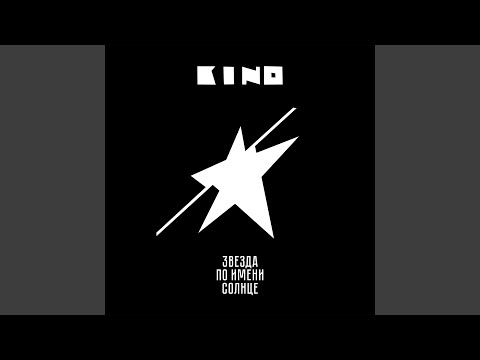
Звезда по имени Солнце (1989)



Оригинални текстови
руски
Превод
немачки
Апрель
April
Auf der Erde ist Frost,
fass nichts an, alles Eis.
Nur in meinen Träumen singt ein Tropfen.
Und der Schnee fällt wie eine Wand,
Schnee fällt den ganzen Tag,
und hinter dieser Wand wird es April.
Und er wird kommen, und bringt mit sich den Frühling,
und zerstreut der grauen Wolken Armee.
Und wenn wir alle in seine Augen sehen,
Dann wird sein Blick uns Wehmut erwidern.
Und die Haustueren öffnen sich,
Komm, setz Dich, mit den Füssen findest Du keine Wahrheit.
Und wenn wir alle in seine Augen schauen werden,
dann sehen wir in diesen Augen das Licht der Sonne.
Unzaehlbar die Wunden am Körper,
die Schritte sind schwer,
nur in der Brust brennt ein Stern.
Und April wird sterben
und wird neugeboren,
April wird für immer kommen.
Und er wird kommen, und bringt mit sich den Frühling,
und zerstreut der grauen Wolken Armee.
Und wenn wir alle in seine Augen sehen,
Dann wird sein Blick uns Wehmut erwidern.
Und die Haustueren öffnen sich,
Komm, setz Dich, mit den Füssen findest Du keine Wahrheit.
Und wenn wir alle in seine Augen schauen werden,
dann sehen wir in diesen Augen das Licht der Sonne.


 Song details


 Translation details


Give a shoutout to cigany







Коментари 17
Hello,
Correct me if I'm wrong. After all, I'm only a beginner in German, but to me it looks like you have translated very literally " а то в ногах правды нет." "В ногах правды нет" is an idiom which means to invite someone to sit down, there's no need to stand.
https://lyricstranslate.com/en/idiom/v-nogah-pravdy-net
Hi there!
you are correct, i really stayed very literal, although i was already told that it´s an idiom by someone else.
But it is a beautiful idiom, and i tried to imagine how it was meant during its development. i think it could mean that sometimes relevant truths are not found while running around, always occupied, instead it is in periods of rest and during personal interaction that new thoughts emerge.
so i tried to conserve the idiom´s content by creating sth similar in german.
I'm glad to hear that I was right. I thought that maybe I'm missing something here and the translation of it isn't as literal as I thought.
Yes, it is a beautiful idiom, and you have an interesting thought about it. I never thought about this idiom in such a way. I simply translated it as "Sit down, there's no need to stand" when I made my translation of this song.
hi, admittedly i wasn´t completely literal.. what i wrote in german means literally: "you don´t find truth with your feet".
i felt like "there is no truth at your feet" was too confusing in german.
now i am unsure, as it seems i have translated my interpretation into the idiom... well, it is not a world-changing problem, but i would be interested still in the creation of this idiom.
Still, I'm glad that I wasn't entirely wrong.
Personally, I don't have any problems with your interpretation of it. As I said before, you have an interesting thought.
However, there's one thing I would like to ask. Could you please align your translation with the lyrics in the original so that it would be easier to read it? As a beginner in German, I would be very grateful.
Done.
One disclaimer though: i am a beginner in russian. I know the basic grammar rules, but for vocab i very often use google translate.
Anyone corrections are welcome.
Thank you very much! :)
Well, I'm only intermediate in Russian and, as you already know, a beginner in German, but I think the line "А он придёт и приведёт за собой весну" in German means "Und er wird kommen und den Frühling mit sich bringen wird." because придёт is a future tense.
My suggestion is to check the conjugations of the words to make sure if that word is in the past tense, present tense, or future tense. GT might be good enough to check what one word means, as long as there isn't any indirect meaning involved, but other than that, I wouldn't suggest relying on it so often.
Hi there, thanks again, yes google translate has its serious limitations, especially if poetic language is to be translated.
i definitely have to repeat the russian tenses (at some point when there is more time).
concerning your translation "und er wird kommen und wird den Frühling mit sich bringen" (i changed a bit, that way it sounds more natural).
Are you sure that "придёт" is future tense though? isn´t it just the perfective aspect (expressing the intention or belief that an action will be finished)?.
there is no grammatical distinction like perfective and imperfective aspect in german.
But if i say "Frühling kommt" in the middle of winter it can be understood in german with the same meaning as "Frühling wird kommen", just from context.
Hi,
Google Translate can also completely mistranslate a word if it's accidentally written incorrectly. As a result, it can create the impression that a certain word can mean something it actually doesn't at all, if the user forgets to check if everything's written correctly.
Well, 4 different sites say that "придёт" is future tense. I doubt that the site owners of these sites collectively decided to allow anyone to publish nonsense on their sites. However, I won't be offended if you decide to ask someone else to confirm this.
As for German, my apologies; I somehow missed this fact. Thank you for pointing it out.
Yes, придёт is the future tense, had you wanted to use the present tense, you would have to use приходит instead
Hi there, thanks again. could you tell me which 4 sites you used?
and don´t get me wrong.. i didn´t say it was nonsense. the perfective aspect can mean future tense, but there´s also future expressed like "я буду ждать..." - i will wait. so it´s just two ways to express the same thing, a little similar (not the same) like the german use of present tense and future tense in the example i gave, where the meaning ultimately would be the same.
Here are these 4 sites:
http://masterrussian.com/verbs/prikhodit_priyti.htm
https://www.russlandjournal.de/en/learn-russian/verb-conjugation/prijti/
https://russianstepbystep.com/grammar/russian-conjugated-verbs/to-arrive...
https://cooljugator.com/ru/%D0%BF%D1%80%D0%B8%D0%B9%D1%82%D0%B8
Don't worry; I know you didn't say it. I just stated why I believe it cannot be incorrect information.
Hi spirit!
Thanks a lot for those sites. I guess now i know where to go to refresh my grammar.
The essential info for me was: "perfective Verbs don't have a present tense" from Russian step by step.
I ll make an edit, but as I said, present tense sounds a bit more natural in German..
Greetings, chris
Hi!
You're welcome. I'm glad to hear that you found useful information in them.
Edit done, i turned most, but not all of the german verbs into future.. as i explained, present tense can be used as a form of future in german if it is clear from the context that the thing talked about is a conviction about what is going to happen in the future.
i think this is similar to the perfective aspect in russian. in a way. at least in the way i understand it until someone teaches me better.
I've got to admit that it's a little bit confusing for me that the present tense can be used as a form of future, but I think I'll get used to it with time.
I just have to try to keep this in mind.
Thank you for the explanation.
Lyrics have been updated. Please review your translation